Bipartisan Panel Formed to Study Why Congress Can't Agree on Anything Immediately Fails to Agree on Anything
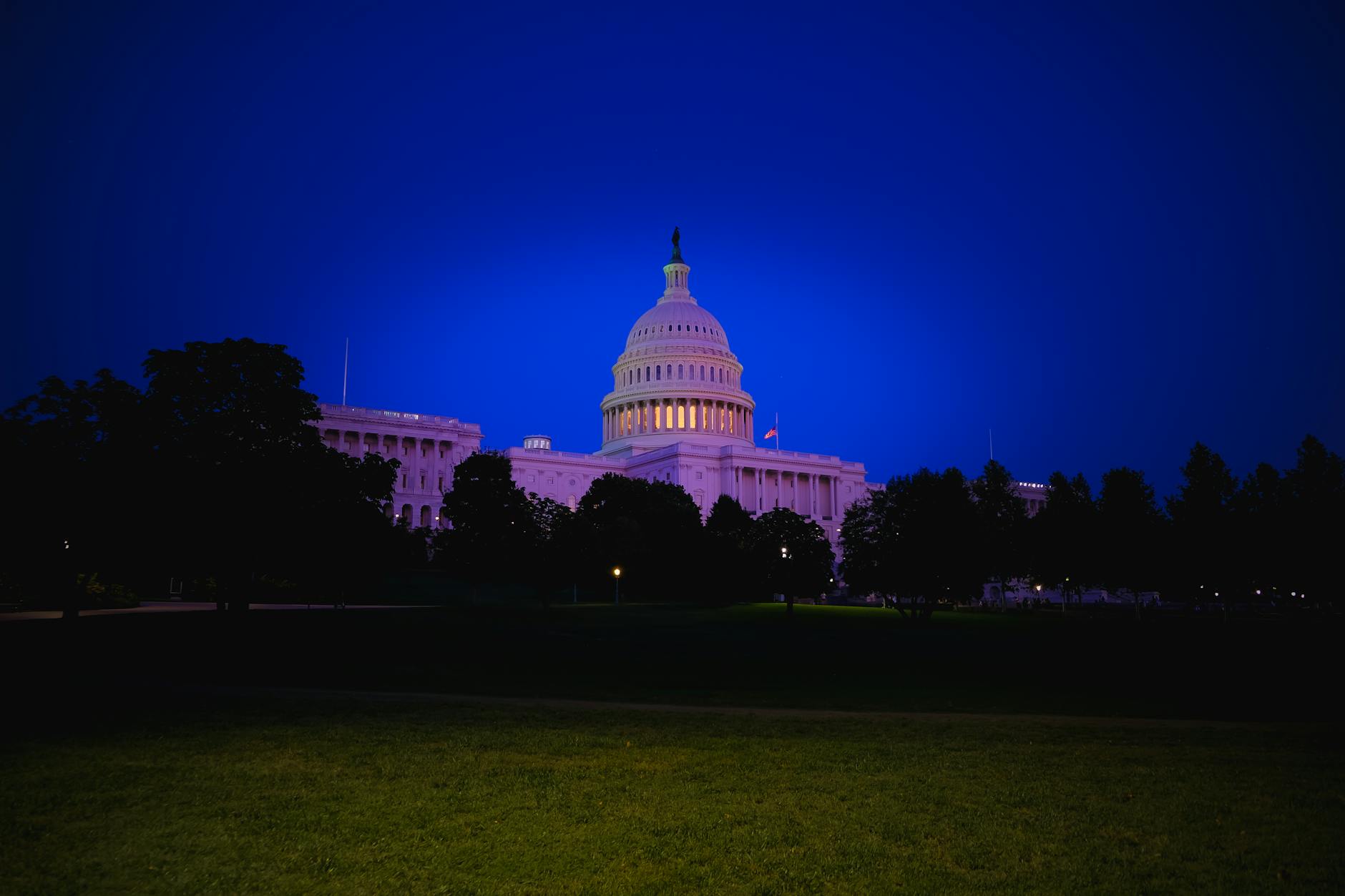
Bipartisan Panel Formed to Study Why Congress Can't Agree on Anything Immediately Fails to Agree on Anything
WASHINGTON — In what congressional leadership described Thursday as "a bold step toward understanding why bold steps are so rarely taken," the House of Representatives formally established the Subcommittee on Congressional Efficiency and Procedural Reform, a bipartisan body charged with producing a comprehensive report on legislative gridlock and why, in the estimation of most Americans, nothing in Washington ever actually gets done.
The subcommittee convened for the first time at 10 a.m. in Room 214 of the Rayburn House Office Building. By 2:15 p.m., members had successfully agreed that the room was adequately lit and that water would be provided. The question of whether sparkling water constituted an appropriate use of committee resources was tabled for a later date.
"Today marks the beginning of a serious, good-faith effort to examine the structural and procedural barriers that have prevented this institution from functioning at its full potential," said Subcommittee Chair Representative Doug Halloran (R-OH), reading from a prepared statement that three of his Democratic colleagues had declined to co-sign on the grounds that the word "structural" carried ideological implications they were not prepared to endorse.
The Mission Statement Situation
The subcommittee's first order of business was ratifying a mission statement, a document that had been drafted collaboratively over six weeks by a working group of fourteen staffers and then revised, according to one senior aide who asked not to be named, "approximately 90 times, not counting the tracked-changes version that Dave sent at 11 p.m. on a Friday."
The statement, in its 91st iteration, read: "The Subcommittee on Congressional Efficiency and Procedural Reform is committed to a thorough, bipartisan examination of the factors contributing to legislative delay and dysfunction, with the goal of producing actionable recommendations for reform."
Representative Sandra Bloom (D-CA) moved to replace "dysfunction" with "underperformance," arguing that "dysfunction" was a loaded term that would alienate members who might otherwise support the subcommittee's work. Representative Phil Garrett (R-TX) countered that "underperformance" was insufficiently direct and that the American people deserved plain language.
Representative Bloom then suggested "suboptimal function."
The subcommittee recessed for lunch.
When members returned, the mission statement had been removed from the agenda entirely and replaced with a motion to form a working group to revisit the mission statement language at a future meeting. The motion passed 7–5, with two abstentions.
The Timeline
The subcommittee's formal work plan, distributed to members as a 12-page document with a cover page that reads "DRAFT — NOT FOR DISTRIBUTION" despite having been distributed, outlines an ambitious schedule:
- Q3 2025: Organizational phase. Member orientation, staff hiring, identification of relevant prior reports.
- Q1 2026: Research phase. Hearings, witness testimony, review of existing literature on congressional gridlock.
- Q3 2026: Deliberation phase. Drafting of preliminary findings.
- Q1 2027: First substantive full-committee meeting to review draft findings.
- Q4 2027 (estimated): Final report publication, subject to member availability and the midterm election calendar.
The plan does not include an implementation phase. When a reporter asked about this, a spokesperson for the subcommittee said that implementation "falls outside the subcommittee's current mandate" and would likely require the formation of a separate subcommittee.
Commentary From the Field
The establishment of the subcommittee was welcomed cautiously by the Brookfield Institute for Legislative Process Research, a Washington think tank that has been studying congressional inaction since 1987 and which, according to its own website, is "approaching a period of significant analytical output."
"We're genuinely encouraged," said Brookfield Institute President Dr. Alan Voss, who has been president of the Brookfield Institute since 1994. "This is exactly the kind of structured inquiry that our own work has long suggested is necessary. We've been building toward a set of preliminary findings for some time now, and we believe the subcommittee's efforts could prove complementary to that work."
Asked when the Brookfield Institute's preliminary findings might be published, Voss said they were "in the late drafting stage" and that the team was "very close."
The institute said the same thing in 2019. And in 2014. A 2009 press release describes the findings as "imminent."
What Happens Next
The subcommittee's second meeting has been scheduled for September, though three members have flagged potential scheduling conflicts related to recess, a district work period, and what one office described simply as "a thing."
Chair Halloran expressed confidence that the subcommittee would ultimately produce a report of genuine consequence. "The American people are frustrated, and rightly so," he said. "They want to see Washington work. They want results. This subcommittee is going to find out why they're not getting them and produce a document that clearly explains the situation."
He was then asked whether the document would lead to any actual changes.
"That," he said, "would be a matter for the full House."
The full House is currently reviewing a motion, introduced in 2022, to form a committee to examine the backlog of unreviewed motions. That committee has not yet been formally constituted. Its mission statement is in draft.