Both Parties Celebrate Historic Agreement on Bill That Legally Defines the Word 'Bipartisan'
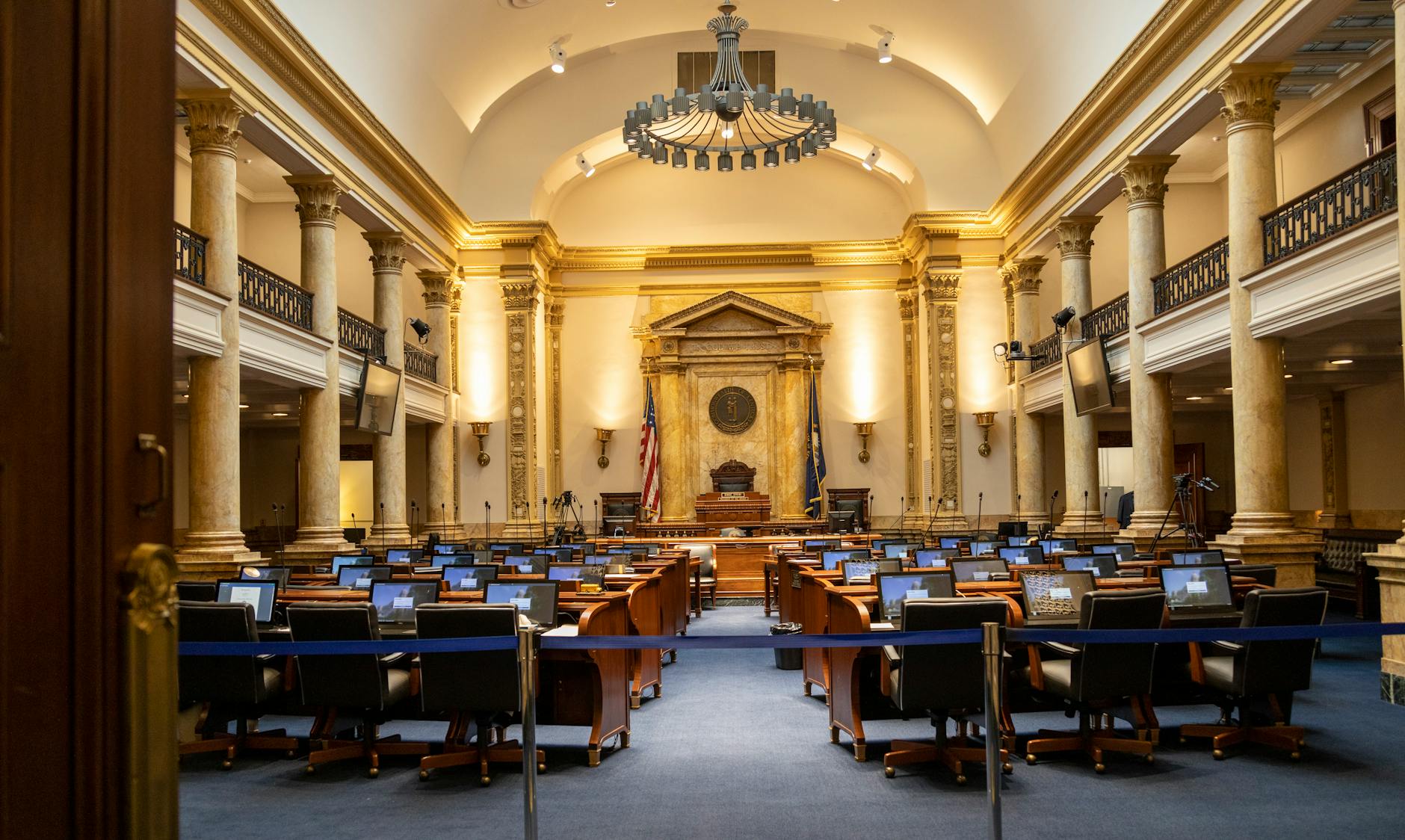
Both Parties Celebrate Historic Agreement on Bill That Legally Defines the Word 'Bipartisan'
The Daily Procedure | Technology & Culture
Washington was briefly, cautiously, and in several cases tearfully united this week as the United States Senate passed the Bipartisan Certification and Labeling Standards Act of 2025, a piece of legislation that both parties have hailed as proof that American democracy still functions — despite the bill's primary purpose being to create a committee that decides whether future bills are allowed to call themselves bipartisan.
The vote was 94 to 6. The six dissenting votes have not been explained. Three of the six senators have since released statements saying they meant to vote yes.
A Bill Both Sides Can Love, Primarily Because It Does Nothing
The BCLSA, as it is known to the fourteen staffers who drafted it and the zero members of the public who have read it, establishes the Federal Bipartisan Standards Review Board — a twelve-member body, equally divided between Republicans and Democrats, charged with evaluating whether any bill presented to Congress as bipartisan genuinely meets the criteria for bipartisan classification before it may be formally described as such in press releases, floor speeches, or campaign advertisements.
The Board has no enforcement power. Its findings are advisory. Its budget is $4.3 million annually, drawn from a fund originally earmarked for rural broadband expansion.
"This is what governing looks like," said Senator Tom Greer (R-OH), one of the bill's lead sponsors, at a press conference held in front of an unusually large American flag. "Two parties. One table. One shared belief that we need a process for having processes. That's America."
Standing immediately to his left, Senator Diana Foss (D-CA), the bill's Democratic co-sponsor, nodded with the practiced solemnity of someone who has attended many press conferences and knows exactly how long to hold eye contact with a camera.
"We didn't agree on everything," she said. "But we agreed on this. And this is a start."
When a reporter asked what, specifically, this was a start of, both senators looked briefly at each other and then at their respective staffers before Foss said, "The process."
A Timeline of Cooperation
The BCLSA was first proposed in January as a one-page concept memo by a junior legislative aide named Marcus Webb, who has since been promoted, reassigned, and according to two sources, "quietly counseled" about "managing expectations around credit."
The bill passed through committee in eleven days — a pace that Senate Majority Whip Roland Birch called "frankly alarming" before clarifying that he meant alarming in a positive sense, "like a very loud alarm that wakes you up to good news."
It attracted co-sponsors from thirty-eight states, most of whom, according to their own offices, had not read the full text but were "supportive of the spirit." When The Daily Procedure asked three separate Senate offices to describe the spirit of the bill, we received three different answers, one of which was the word "unity" repeated four times in a row.
The Expert Panel Convenes Over Catered Lunch
The Georgetown Center for Legislative Process Studies — a think tank that, according to its own website, has been "shaping the conversation on process since 1994" — released a 78-page white paper on the BCLSA the morning after its passage.
The paper, titled Toward a Framework for Bipartisan Definitional Consensus: A Preliminary Overview of Considerations, concluded that the bill represents "a historic inflection point in Washington's long relationship with the concept of working together without actually doing so."
Dr. Howard Blaine, the Center's Executive Director and author of four previous white papers on congressional labeling standards, called the BCLSA "the most significant procedural legislation since the Procedural Modernization Act of 2017," which he also wrote a white paper about, and which was also, upon review, primarily about forming a committee.
"What we're seeing here is the institutionalization of bipartisanship as a brand rather than a practice," Dr. Blaine told The Daily Procedure, in a tone that suggested he considered this a compliment. "The Board will ensure that the word 'bipartisan' retains its meaning. Which, of course, raises the question of what that meaning currently is. Which is, in fact, what the Board will determine. It's quite elegant, really."
When asked whether the BCLSA itself had been certified as bipartisan by the Board it created, Dr. Blaine paused for a long moment.
"That's a genuinely interesting procedural question," he said. "I'll be publishing something on it in the spring."
The Self-Congratulation Escalates
By Thursday, the bipartisan celebration had reached a pitch that political observers described as "unseemly" and "oddly moving in a hollow sort of way."
Senator Greer appeared on four separate cable news programs to describe the bill as "a moonshot for civility." Senator Foss posted a photograph of herself and Greer shaking hands to Instagram with the caption: "This is what's possible. 🇺🇸" The post received 47,000 likes and 3,200 comments, of which approximately 2,800 were arguments about an unrelated issue.
President of the Senate Pro Tempore issued a formal statement calling the BCLSA "a testament to the enduring power of American compromise," a phrase that appeared verbatim in statements from eleven other senators, suggesting a shared talking-points document that nobody has acknowledged.
The White House issued a one-sentence response: "The President is supportive of bipartisan efforts."
The sentence did not specify which bipartisan efforts, or this one in particular.
What Happens Next
The Federal Bipartisan Standards Review Board must be formally constituted within 180 days of the bill's enactment. Each party will appoint six members, subject to approval by a joint Senate committee. The joint Senate committee must itself be certified as bipartisan by the Board before it can convene — a sequencing problem that three constitutional law professors described to The Daily Procedure as "a real chicken-and-egg situation," "a classic legislative bootstrapping paradox," and "oh, come on."
Dr. Blaine's think tank has already submitted a proposal to advise the Board during its formation phase. The proposal is 94 pages. Its budget request is $2.1 million. It includes a line item for "facilitated dialogue sessions" at a resort in Scottsdale, Arizona.
In a statement released Friday, Senator Greer called the road ahead "long but worth walking." Senator Foss called it "the beginning of a new chapter in American governance."
The chapter, by all available indications, is mostly about forming a committee to decide what the chapter is about.
Both parties agree this is historic.
They have not yet agreed on what it is historic for. A subcommittee has been proposed.