Bipartisan Achievement Solves Problem by Multiplying It
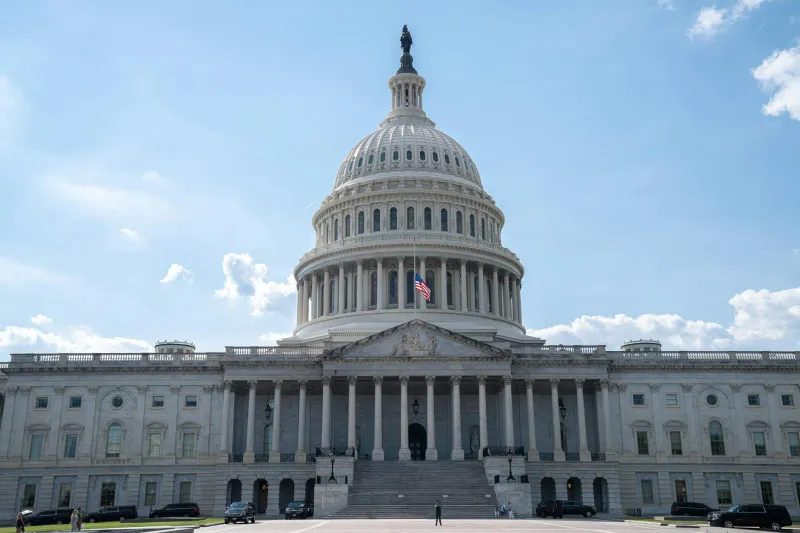
In a rare display of cross-aisle cooperation, Congress yesterday passed the Legislative Efficiency Enhancement Act by a unanimous 435-0 vote, successfully addressing the critical issue of legislative overcrowding by immediately generating seven additional pieces of legislation to manage its implementation.
The original bill, sponsored jointly by Representative Maria Santos (D-CA) and Representative James Mitchell (R-TX), establishes a framework for reducing the number of bills introduced each congressional session from an average of 8,000 to a more manageable 6,500.
"This is exactly the kind of decisive action the American people deserve," declared Santos at a packed press conference. "We've proven that when Congress sets its mind to solving a problem, we can create multiple solutions simultaneously."
Mitchell nodded enthusiastically, adding, "The Legislative Efficiency Enhancement Act represents a new era of streamlined governance. That's why we've already drafted the Legislative Efficiency Enhancement Implementation Protocol Act to ensure proper rollout."
Companion Legislation Demonstrates Thorough Approach
Within hours of the original bill's passage, House leadership announced the introduction of several supporting measures, each addressing specific aspects of the streamlining process.
The Legislative Efficiency Enhancement Clarification Act (H.R. 7821) provides detailed definitions for terms used in the original legislation, including a 47-page appendix explaining what constitutes "legislative efficiency." The bill's sponsor, Representative David Chen (D-WA), emphasized the importance of precision in government operations.
"We cannot afford ambiguity when it comes to reducing ambiguity," Chen explained. "This clarification act ensures that everyone understands exactly what we mean when we say we're going to introduce fewer bills by introducing more bills that explain how to introduce fewer bills."
The Legislative Efficiency Enhancement Oversight Act (H.R. 7822) establishes a bipartisan commission to monitor compliance with the streamlining requirements. The commission will produce quarterly reports on legislative volume reduction progress and maintain a comprehensive database of all bills introduced to reduce the number of bills being introduced.
Expert Commentary Reveals Strategic Brilliance
Dr. Patricia Williamson, director of the Center for Legislative Studies at Georgetown University, praised Congress's innovative approach to the overcrowding problem. Her organization has been studying congressional productivity since 2009 and expects to complete its analysis sometime in the next decade.
 Photo: Georgetown University, via i.pinimg.com
"This is a masterclass in governmental problem-solving," Dr. Williamson observed. "Rather than simply reducing the number of bills—which could appear lazy or unproductive—Congress has chosen to reduce bills while simultaneously increasing bills. It's bureaucratic poetry."
The Center's preliminary research suggests that the most effective way to address legislative complexity is through additional layers of legislative oversight, each requiring its own comprehensive regulatory framework.
Henry Goldstein of the Institute for Congressional Efficiency concurred, noting that the proliferation of streamlining-related legislation demonstrates "exactly the kind of thorough, multi-faceted approach that makes American democracy the envy of the world."
Implementation Timeline Reflects Careful Planning
The Legislative Efficiency Enhancement Act includes a detailed three-phase implementation schedule designed to gradually reduce legislative volume over the next six years. Phase One requires the establishment of a Bill Counting Commission, which will conduct a comprehensive audit of all existing legislation to create a baseline for future reductions.
Phase Two involves the creation of standardized Bill Necessity Assessment Forms, which must be completed for every proposed piece of legislation. These forms will be reviewed by the newly established Department of Legislative Redundancy Prevention, pending passage of the Legislative Efficiency Enhancement Bureaucracy Establishment Act (H.R. 7823).
Phase Three implements the actual reduction targets, assuming successful completion of the Legislative Efficiency Enhancement Assessment Protocol (H.R. 7824), which establishes metrics for measuring legislative efficiency improvements.
Amendments Demonstrate Bipartisan Collaboration
The original bill has already attracted fourteen proposed amendments, including the Legislative Efficiency Enhancement Gender Equity Amendment, which ensures equal representation of male and female sponsors on all streamlining-related legislation.
Representative Sarah Johnson (R-FL), sponsor of the amendment, emphasized the importance of inclusive efficiency. "When we streamline Congress, we must ensure that our streamlining reflects the diversity of America. This amendment guarantees that our reduction efforts will be equitably distributed across all demographic categories."
The Legislative Efficiency Enhancement Environmental Impact Amendment requires a comprehensive environmental assessment of all paper savings resulting from reduced legislation. The amendment's sponsor, Representative Michael Torres (D-OR), noted that "true efficiency must account for the ecological benefits of fewer printed bills."
Committee Structure Ensures Proper Oversight
House leadership announced the formation of the Select Committee on Legislative Efficiency Enhancement, which will oversee implementation of the streamlining process. The committee will work closely with the existing Committee on Oversight and Reform, the Committee on House Administration, and the newly proposed Committee on Committee Efficiency.
"We're taking a comprehensive approach to oversight," explained Committee Chair Representative Lisa Park (D-NY). "The Select Committee will coordinate with all relevant stakeholders to ensure that our efforts to reduce legislative complexity don't accidentally increase legislative complexity."
The Committee plans to hold weekly hearings throughout the implementation period, with each hearing focused on a specific aspect of the streamlining process. Topics will include "Measuring Efficiency Efficiency," "Streamlining Streamlining Procedures," and "Optimizing Optimization Protocols."
Future Legislation Promises Continued Progress
Congressional leadership confirmed that additional bills are already in development to address potential gaps in the current streamlining framework. The Legislative Efficiency Enhancement Long-Term Sustainability Act will establish permanent funding for efficiency monitoring, while the Legislative Efficiency Enhancement Emergency Procedures Act will provide protocols for handling urgent legislation during streamlining periods.
Representative Mitchell assured reporters that Congress remains committed to the original goal of reducing legislative volume. "Every bill we introduce to support the Legislative Efficiency Enhancement Act brings us one step closer to introducing fewer bills," he explained. "That's how democracy works."
Speaker of the House Nancy Rodriguez praised the bipartisan achievement during her weekly press conference. "This legislation proves that when Republicans and Democrats work together, we can accomplish anything—including solving problems by creating identical but separate versions of the same problem. It's what the founders would have wanted."