Federal Agency Celebrates Record Public Engagement for Program the Public Was Legally Barred From Knowing About
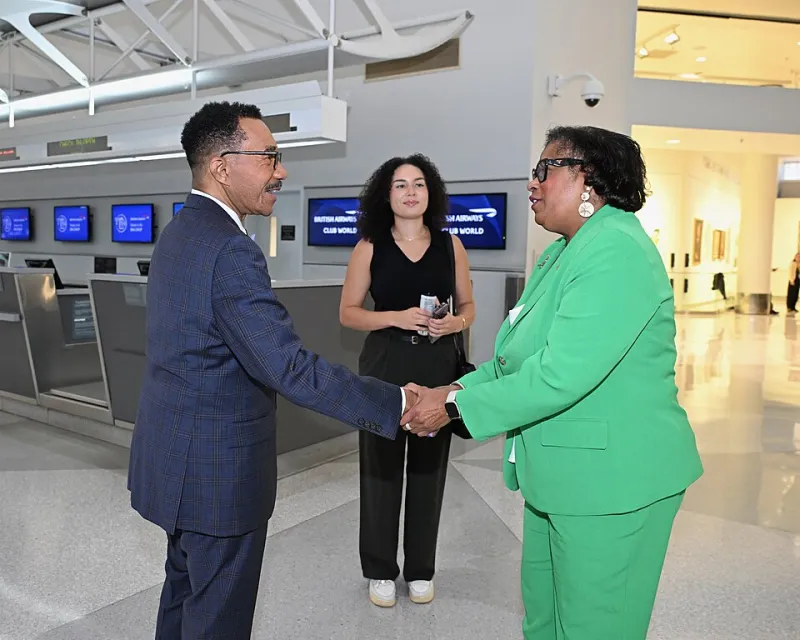
Photo: Maryland GovPics, CC BY 4.0, via Wikimedia Commons
The Department of Strategic Infrastructure Coordination announced this week that its Pathways to Participation Initiative had concluded as one of the most successful public outreach campaigns in the agency's history, generating 4.2 million impressions, 870,000 unique web visitors, and what communications director Janet Holbrook called "a genuinely extraordinary level of civic enthusiasm."
The program the campaign was promoting required a Tier 3 federal security clearance to access, was technically classified under a 2019 interagency information-sharing protocol, and was open exclusively to pre-approved contractors operating within a fifty-mile radius of facilities in Texas, Virginia, and one county in Maryland whose name the Department declined to confirm.
Of the 870,000 people who visited the program's landing page, 869,983 encountered a message reading: Thank you for your interest. This program is not available to the general public. For eligibility information, please contact your contracting officer. The remaining seventeen were contractors who had already enrolled.
"We consider that a win," Holbrook said.
The Campaign Itself
The Pathways to Participation Initiative was conceived in early 2022 as part of the Department's broader commitment to public transparency, a commitment that, internal documents suggest, was itself the subject of a classified addendum clarifying which aspects of it were not subject to transparency requirements.
The campaign ran across digital, print, and social media platforms over eighteen months, with a budget of $2.3 million. It featured a series of public-facing videos in which actors portrayed citizens enthusiastically engaging with a program described only as "a unique federal opportunity to contribute to America's infrastructure future," which communications consultants advised was sufficiently vague to remain compliant with the program's classification status.
The campaign's tagline — Your Voice. Your Future. Apply Today. — appeared on bus shelters in fourteen cities, none of which were in Texas, Virginia, or the unnamed Maryland county where the program operated.
"We wanted to cast a wide net," Holbrook explained. "Public awareness is about more than just the people who can actually participate. It's about the feeling of inclusion. The sense that something is happening. That's a public good in itself."
When asked whether it was accurate to describe a classified program as a public opportunity, Holbrook consulted a printed document for several seconds before responding that the campaign had been reviewed and approved by the Department's Office of Communications Compliance, which she noted was a real office.
The Legal Footnote
Buried in section 7.4 of the program's official documentation — documentation that is itself not publicly available but was described to this publication by a source who requested anonymity and then, upon reflection, also requested that we not confirm their agency — is a clause specifying that awareness of the Pathways to Participation Initiative's existence constitutes acknowledgment of an associated nondisclosure obligation under the Federal Information Security Management Act.
In practical terms, this means that any member of the public who saw the bus shelter advertisement, clicked the landing page, or watched the YouTube pre-roll video is technically bound by a nondisclosure agreement they did not sign and may not have known they were entering.
The Department's legal counsel, reached for comment, confirmed that the NDA provision was "standard language" and that it was "very unlikely" to be enforced against members of the public who had simply seen an advertisement on the Washington Metro. When asked to confirm that it was impossible rather than merely unlikely, counsel said she would need to check.
She has not followed up.
Experts Respond
Dr. Marcus Ellroy, a professor of public communications at American University who has spent twelve years studying federal outreach strategy, described the campaign as "genuinely unprecedented" in his experience.
 Photo: Dr. Marcus Ellroy, via mhospital.ro
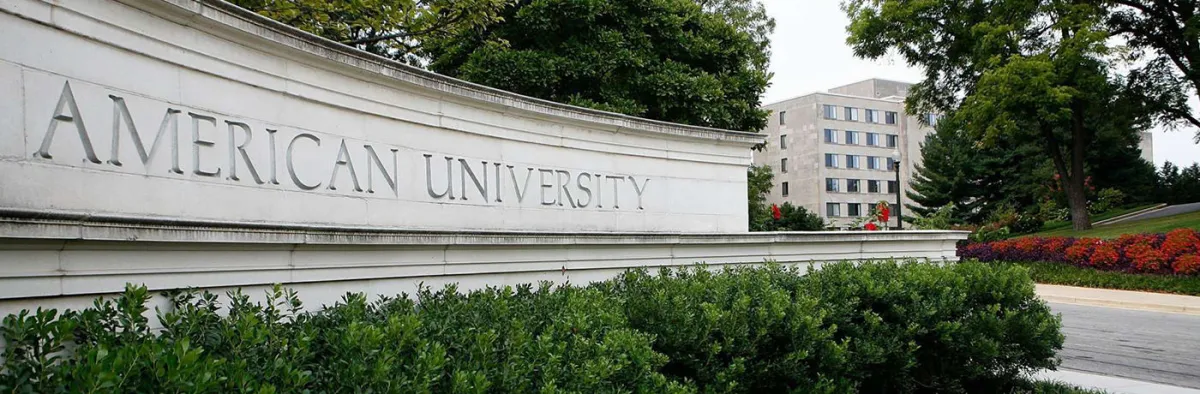 Photo: American University, via ik.imagekit.io
"What you have here," Ellroy said, "is a textbook public awareness campaign — strong creative, wide distribution, solid metrics — deployed entirely in service of a program the public could not, under any circumstances, participate in or discuss. It's a masterclass in telling people about something they are not permitted to know about. I'm going to use this in my graduate seminar. Assuming I'm allowed to."
Ellroy added that the 4.2 million impressions figure was, technically, accurate, and that from a pure communications standpoint the campaign had performed well above industry benchmarks.
"If the goal was awareness," he said, "they achieved awareness. Of a thing. The thing itself remains classified, but the awareness is real. I think. I'd want to check whether awareness is covered by the NDA before I committed to that."
A representative from the Government Accountability Office, contacted for comment, noted that the GAO had reviewed the campaign in 2023 and found no irregularities, a finding it confirmed was based on the publicly available portion of the program documentation, which covers the bus shelter design choices and the YouTube thumbnail.
Looking Ahead
The Department of Strategic Infrastructure Coordination confirmed this week that it plans to build on the campaign's success with a follow-up initiative, the Pathways to Participation Phase Two Awareness Drive, which will run for twenty-four months beginning in the fall.
Phase Two, Holbrook confirmed, will promote a program that is currently in the design stage, has not yet received final authorization, and whose eligibility criteria have not been determined. The classification status of Phase Two has not been confirmed, though the Department's communications team noted that this information was itself subject to review.
The campaign's tagline is already in production.
"We've learned a lot from Phase One," Holbrook said, with the composed satisfaction of someone whose metrics have never once required her to explain what the program actually did. "The public responded. That's what matters."
Among the 870,000 people who visited the Phase One landing page, a follow-up survey conducted by the Department found that 94 percent reported feeling informed about federal infrastructure opportunities. Sixty-one percent said they planned to apply.
The survey did not ask whether they had read the message explaining they were ineligible.
The Department considers this a methodological strength.