Congressional AI Hearing Sets New Record: Seven Hours of Democracy Produce Zero Regulations and One Senator Who Thinks Google Is a Person

WASHINGTON — The Senate Commerce Subcommittee on Emerging Technologies concluded its highly anticipated artificial intelligence oversight hearing Thursday afternoon, having spent approximately seven hours achieving a thorough and bipartisan understanding of almost nothing. Officials confirmed the session was the longest AI hearing in Senate history, a distinction experts described as 'meaningful, in the way that a very large hole in the ground is meaningful.'
Four chief executives from the nation's leading AI companies were summoned to appear before the panel, where they sat in a row behind small nameplates and answered questions with the practiced calm of men who had been extensively briefed on how to explain electricity to a golden retriever.
Opening Statements Establish the Tone
The hearing opened at 9:14 a.m. with Chairman Gerald Fitch (R-OH) announcing that the Senate was prepared to 'get to the bottom of this AI situation once and for all,' a statement that drew applause from the gallery and quiet, sustained dread from everyone else in the room.
The first forty minutes were devoted to procedural matters, including a seven-minute debate about whether the hearing's live stream was 'an AI' and a brief recess after Senator Patricia Dunmore (D-ME) asked a staff member to 'pull up the algorithm' on the committee's shared screen.
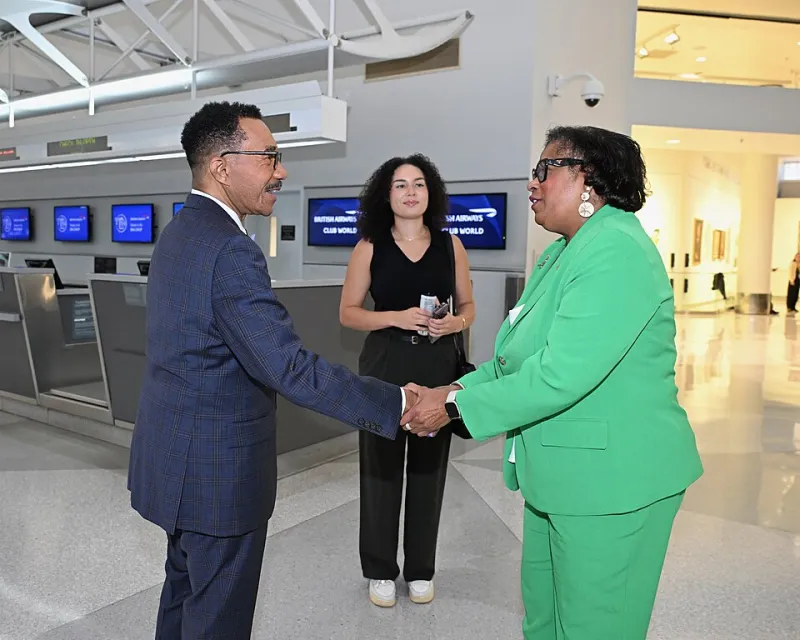
 Photo: Patricia Dunmore, via static.wixstatic.com
'I just want to see it,' Senator Dunmore clarified, upon returning. 'The algorithm. Can we look at it? Is it in a file somewhere?'
The CEO of a leading AI firm explained, carefully, that an algorithm is not a document so much as a set of mathematical instructions, at which point Senator Dunmore nodded and wrote something down that her office later confirmed was 'find out who has the file.'
The Questions America Deserved
By the second hour, the hearing had settled into a rhythm that observers described as 'educational, primarily for the witnesses.'
Senator Douglas Haig (R-TX) used his allotted eight minutes to establish whether TikTok and artificial intelligence were 'the same thing or two different things,' and upon learning they were two different things, asked a follow-up question about whether 'the Spotify' was involved. He then yielded the remainder of his time to ask one of the CEOs to write down his personal email address 'so we can loop back.'
Senator Carol Fenn (D-CA), who sits on the Subcommittee on Communications and has done so for eleven years, asked whether it was possible to 'turn the AI off at night' and, if not, who was watching it. A CEO explained that AI systems do not require supervision in the way a small child requires supervision, to which Senator Fenn replied that that was 'exactly what someone would say if something bad was happening.'
The hearing's most widely circulated exchange occurred shortly before the lunch recess, when Senator Bob Pruitt (R-KS) asked a CEO — under oath, before the full committee, in the United States Senate — whether 'the website' belonged to the company or to 'whoever made the internet.' A four-minute clarification followed. Senator Pruitt remained unconvinced and submitted the question for the record.
Expert Witnesses Describe the Experience
Dr. Miriam Osei, a technology policy researcher at a Washington think tank who testified as an expert witness, described the experience in measured terms during a brief hallway interview.
'It was a historic moment,' Dr. Osei said, pausing for approximately three seconds longer than was comfortable. 'The senators demonstrated a genuine commitment to the process of asking questions. Whether those questions bore any relationship to artificial intelligence specifically is — I think that's a conversation worth having.'
A second expert witness, who asked not to be named, confirmed that two senators had approached him during a recess to ask whether ChatGPT could be subpoenaed and, if so, 'what courthouse it would have to go to.' He told them he would look into it. He has not looked into it.
The Regulatory Outlook Remains Robust in Its Emptiness
As the hearing entered its sixth hour, Chairman Fitch announced that the committee was 'zeroing in' on potential regulatory frameworks and invited each CEO to describe, in their own words, what regulations they would personally find most acceptable. All four CEOs provided detailed answers. The Chairman thanked them and said the committee would 'take that under advisement.'
By 4:47 p.m., the session had concluded without producing a single piece of draft legislation, a regulatory proposal, or a working definition of artificial intelligence that all committee members agreed upon. A committee spokesperson confirmed this was 'consistent with the deliberative process' and that a follow-up hearing would be scheduled 'once the members have had time to review the material.'
The material, a 340-page briefing document prepared by committee staff, had been distributed to senators three weeks prior. Sources familiar with the matter confirmed that at least two copies remain in their original sealed envelopes.
What Comes Next
The subcommittee is expected to reconvene in the fall, at which point members will have had the summer to develop more refined questions. Staff are reportedly preparing a one-page explainer on what a neural network is, written at what one aide described as 'a very accessible level.' A glossary has been commissioned.
In the meantime, the AI industry continues to develop at a pace that several witnesses described as 'rapid' and that the Senate, based on available evidence, is prepared to address sometime before it becomes someone else's problem.
Senator Dunmore's office confirmed Friday that she has still not located the algorithm, but that her team is 'actively pursuing all available channels,' which sources indicate includes a voicemail left with Google's main customer service line.
The voicemail has not been returned.