State Department Extends World-Class Travel Warning System to Domestic Healthcare Navigation

Breaking New Ground in Citizen Safety
The U.S. State Department, renowned for its comprehensive international travel advisories, has taken the unprecedented step of issuing a domestic warning for Americans attempting to navigate their own healthcare system. The newly released "Healthcare Navigation Safety Advisory for U.S. Citizens Traveling Within U.S. Healthcare Networks" spans 900 pages and carries the department's highest threat level designation: "Exercise Extreme Caution and Consider Alternative Destinations."
"We've monitored international conflict zones, natural disaster areas, and regions with active piracy," explained Deputy Secretary of State Jonathan Mitchell at Monday's briefing. "Nothing we've encountered abroad quite compares to the labyrinthine dangers facing Americans who need medical care in their own country."
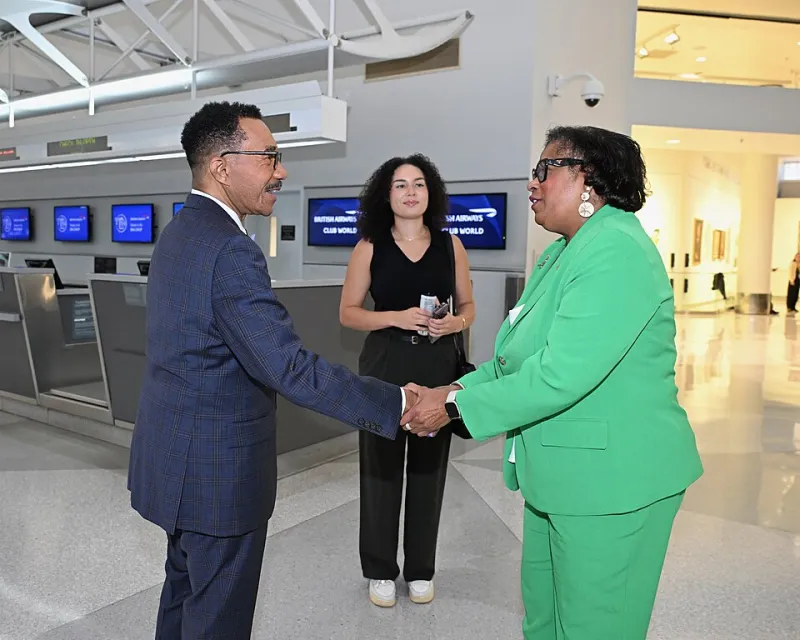
 Photo: Jonathan Mitchell, via images.squarespace-cdn.com
The advisory represents a natural evolution of the State Department's expertise, applying decades of international threat assessment experience to what officials describe as "the most hostile territory we've ever documented."
Mapping the Danger Zones
The advisory divides American healthcare into distinct threat categories, each with specific warnings and survival recommendations. "Level 4: Do Not Travel" zones include Emergency Room billing departments, pharmacy benefit managers' customer service lines, and any facility that promises to "work with your insurance."
"We've identified numerous hostile territories where prior authorization requirements have created essentially lawless regions," noted Regional Security Officer Sarah Martinez. "In these areas, essential medications can be held hostage for weeks while warring insurance factions engage in prolonged bureaucratic combat."
The State Department has also documented what it terms "Provider Disappearance Zones" – geographic areas where doctors who were previously in-network have vanished without explanation, leaving patients stranded in out-of-network territory without warning.
Special attention is given to "Explanation of Benefits Badlands," remote administrative regions where claim processing follows no known logic and communication with the outside world becomes virtually impossible.
Essential Travel Preparations
The advisory includes a comprehensive packing list that reads like preparation for a polar expedition. Recommended items include seventeen forms of identification, a notarized copy of your birth certificate, three character witnesses, a letter from your employer, and "emotional support documentation" for dealing with customer service representatives.
"We strongly advise travelers to bring their own interpreter," said Medical Liaison Officer Dr. Patricia Wong. "Healthcare facilities often communicate in a dialect we call 'Insurance English,' which bears little resemblance to standard American English. Phrases like 'covered benefit' and 'in-network' can have entirely different meanings depending on the phase of the moon and your deductible status."
The advisory also recommends packing emergency provisions including snacks for extended waiting periods, portable phone chargers for marathon hold times, and "a good book, preferably something longer than War and Peace, for specialty appointment waiting lists."
Cultural Sensitivity and Local Customs
A significant portion of the advisory focuses on understanding local healthcare customs to avoid inadvertently triggering additional charges. "Never make direct eye contact with anyone in billing," the guide warns. "This can be interpreted as a challenge and may result in surprise balance billing or mysterious 'facility fees.'"
The document explains the complex tribal structure of healthcare organizations, noting that "the person who schedules your appointment, the person who checks you in, the person who treats you, and the person who bills you often belong to entirely different organizations with no knowledge of each other's existence."
Travelers are advised to learn key phrases in the local dialect, including "I'd like to speak to someone who can actually help me," "What do you mean that's not covered?," and "Can you please transfer me to someone else who will also be unable to help?"
Emergency Protocols and Evacuation Procedures
The advisory includes detailed emergency protocols for common healthcare navigation crises. In case of "Referral Loop Syndrome," where patients are endlessly referred between specialists, the State Department recommends immediately contacting the nearest embassy for extraction assistance.
"We've established emergency hotlines for Americans trapped in prior authorization limbo," explained Crisis Response Coordinator Michael Chen. "Our trained personnel can provide emotional support and, in extreme cases, arrange emergency evacuation to countries with functioning healthcare systems."
The document also outlines procedures for "Network Adequacy Emergencies," situations where patients discover their insurance plan's network consists entirely of providers who retired in 2003 or exist only in theoretical form.
Special Considerations for High-Risk Travelers
The advisory includes enhanced warnings for certain vulnerable populations. "Patients with chronic conditions should consider hiring a professional guide," the document recommends. "These skilled navigators, known locally as 'patient advocates,' can help travelers avoid common pitfalls like accidentally seeking care from providers who don't accept their insurance despite being listed in their plan's directory."
Seniors receive particular attention, with warnings about "Medicare Advantage Wilderness Areas" where traditional Medicare rules no longer apply and survival depends on understanding an entirely different set of bureaucratic customs.
International Perspective and Comparative Analysis
The advisory includes a sobering comparison with international healthcare systems. "Citizens traveling to countries like Canada, the UK, or basically anywhere in Europe should be prepared for culture shock," the document warns. "Healthcare systems in these regions operate according to the bizarre principle that sick people should receive medical care without navigating complex administrative obstacles."
The State Department notes that American travelers abroad often experience "Reverse Healthcare Shock" when they discover that other countries' medical systems are designed around patient care rather than profit optimization.
Accessing the Advisory Requires Insurance
In a final bureaucratic flourish, the State Department has announced that accessing the full healthcare navigation advisory requires proof of insurance coverage. "We want to ensure that only people who actually need this information can access it," explained Information Security Officer Lisa Thompson. "Plus, reading about healthcare navigation can be psychologically traumatic, so we need to make sure people have mental health coverage before we let them see how bad things really are."
The advisory itself is available through a special portal that requires pre-authorization from your insurance company, three forms of identification, and a co-pay that varies depending on whether you're reading it for preventive or diagnostic purposes.
When asked whether issuing a travel advisory for one's own country might send the wrong message internationally, Deputy Secretary Mitchell was philosophical. "At least we're being honest," he said. "Other countries' citizens know exactly what they're getting into when they visit America now. That's just good diplomatic transparency."