Federal Housing Authority Marks Historic Milestone With Launch of Nation's Most Expensive Brochure

Federal Housing Authority Marks Historic Milestone With Launch of Nation's Most Expensive Brochure
WASHINGTON — The Federal Housing Authority announced Friday the culmination of a three-year, multi-agency initiative to address America's affordable housing crisis, unveiling a glossy, full-color, 12-page brochure titled Homes for Tomorrow: A Framework for Thinking About the Possibility of Affordable Housing Solutions in the American Context.
 Photo: Federal Housing Authority, via www.naijabusiness.com.ng
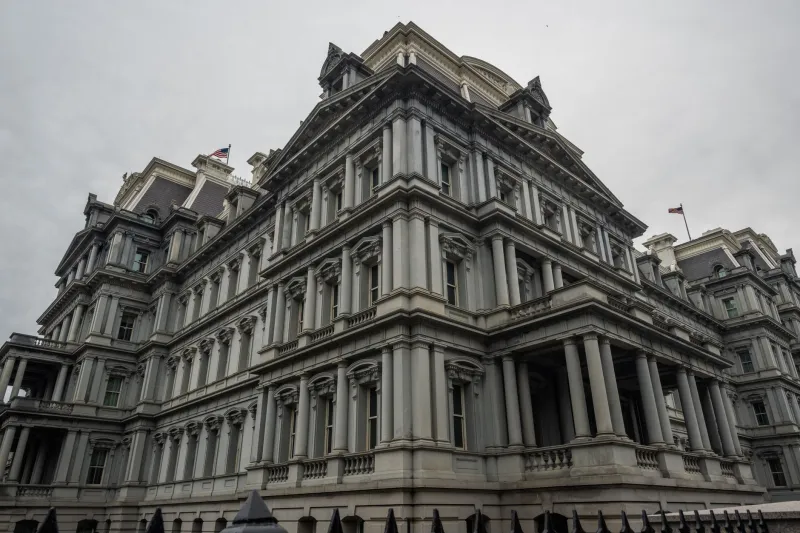
The brochure, which officials described as "a landmark document" and "an actionable vision for the nation's housing future," was distributed to members of Congress, state housing agencies, and select members of the press at a ceremony held in a federal conference room that costs $4,200 a day to rent.
"Today marks a turning point," said Deputy Housing Authority Director Leonard Chu, pausing for effect before a backdrop printed with the brochure's cover image, which depicts a smiling family standing in front of a house that is not specified to be affordable. "For too long, the conversation around housing affordability has lacked a clear, unified, visually compelling document that communicates the federal government's full-color commitment to the issue. That changes today."
 Photo: Leonard Chu, via www.lioner.com
The brochure is available in English and Spanish. A version in twelve additional languages is currently in procurement.
Three Years, Seventeen Working Groups, Twelve Pages
The document's development timeline is, by any measure, an achievement of bureaucratic endurance.
Work began in the spring of 2022, when the Housing Authority convened the Inter-Agency Working Group on Housing Affordability Communication Strategy (IAWGHACS), a body comprising representatives from seventeen federal departments including, notably, the Department of Agriculture, the Office of Personnel Management, and the U.S. Geological Survey, whose precise contribution to a brochure about urban housing costs has not been publicly explained.
IAWGHACS met quarterly for eighteen months, producing four interim reports, two supplementary annexes, and a 60-page style guide governing the brochure's font choices, color palette, and the precise shade of blue used on page seven, which a consultant described in meeting minutes as "aspirationally hopeful without implying false certainty."
In late 2023, a parallel working group — the Cross-Departmental Brochure Content Harmonization Subcommittee — was established after IAWGHACS determined that its mandate covered strategy but not content. The subcommittee met eleven times, produced two conflicting drafts, and ultimately commissioned an independent editorial review at a cost of $340,000.
A third body, the Federal Housing Narrative Alignment Task Force, was formed in early 2024 to reconcile the outputs of the first two groups. It met six times before determining that the brochure was, in its current form, "directionally sound" and required only minor revisions, which took eight months.
Total cost of development: $2.1 million. Total pages: 12. Total housing units created: 0.
What the Brochure Contains
Page one features the title and a photograph of a diverse group of people looking optimistically at a horizon. Pages two and three outline the federal government's "commitment to housing affordability as a national priority." Pages four through eight describe the problem of housing unaffordability in general terms that housing economists have described as "accurate, if not especially illuminating."
Page nine lists seven "pillars" of the federal housing vision, including "Collaboration," "Innovation," "Equity," "Sustainability," "Accountability," "Responsiveness," and "Partnership" — a set of terms that a senior official confirmed could apply, without modification, to any federal brochure produced in the last thirty years.
Page ten features a quote from the Housing Authority Director expressing optimism. Page eleven contains a QR code.
"The QR code is, frankly, where the real functionality lives," said Communications Director Angela Marsh, gesturing at the brochure with what observers described as genuine enthusiasm. "Scan that, and you're taken directly to a form where you can request a physical copy of the brochure. It's a seamless user journey."
When asked whether the form could also be used to access actual housing resources, Marsh confirmed that it could not, but noted that the form's confirmation email contains a link to the Housing Authority's main website, which features a separate portal currently described as "under active development."
Page twelve lists acknowledgments. Forty-three individuals and agencies are thanked. The word "tenant" does not appear.
Expert Reaction
Reception among housing policy experts has been, in the words of one analyst, "a very specific kind of quiet."
"I want to be measured here," said Dr. Patricia Osei of the Urban Housing Research Collaborative, who reviewed the brochure ahead of publication. "There is real value in clear federal communication on housing issues. A document that tells people the government is thinking about this problem is not, in isolation, worthless. But I would note that since 2022, national median rent has increased by 14 percent, and the federal affordable housing construction pipeline has produced approximately 11,000 fewer units than projected. The brochure is very well-designed."
 Photo: Patricia Osei, via www.ghpage.com
She paused. "The shade of blue on page seven is particularly nice."
The National Association of Realtors issued a statement calling the brochure "a positive step." Three housing advocacy organizations issued a joint statement calling it "a brochure." The White House issued a statement calling it "part of a broader, ongoing commitment to the full spectrum of housing affordability solutions," which is also, word for word, what page three of the brochure says.
What Happens Next
Director Chu confirmed that the brochure will be followed by a second phase of the initiative, which will involve convening a new working group to assess the brochure's impact and determine what form the next stage of federal communication on housing affordability should take.
"We expect that process to take approximately eighteen to twenty-four months," he said. "Possibly thirty-six, depending on scope."
When asked whether any of the $2.1 million could have been redirected toward actual housing construction, Chu acknowledged that this was "an interesting framing" and suggested the reporter submit a formal inquiry to the Office of Budget and Legislative Affairs, which would respond within forty-five business days.
Physical copies of the brochure are available upon request. The request form is on page eleven.