Watchdog Finds Itself Broken, Recommends Itself to Fix It
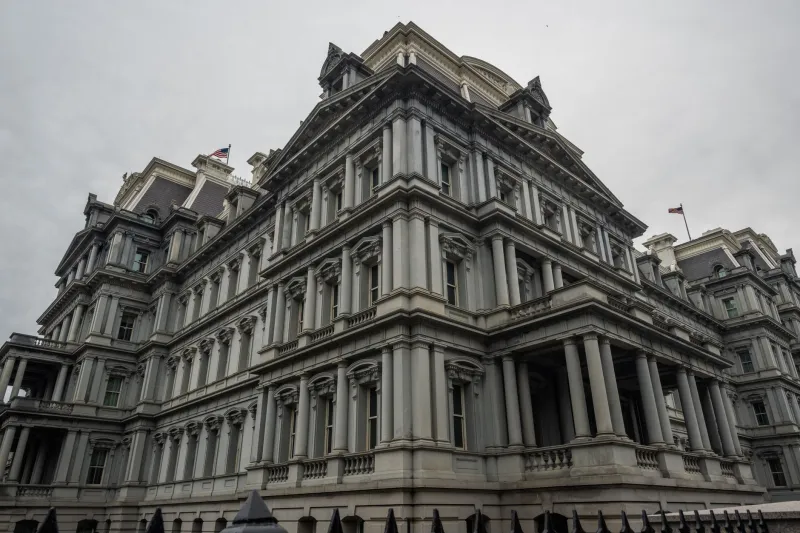
The Government Accountability Office, the federal agency constitutionally tasked with ensuring the government does not get away with things, has released a landmark self-audit this week concluding that the Government Accountability Office is chronically underfunded, operationally compromised, and structurally incapable of holding any institution accountable — including, the report notes in a section apparently written with some reluctance, itself.
 Photo: Government Accountability Office, via directemployers.org
The report, titled Accountability in Federal Oversight: A Review of the Government Accountability Office's Capacity to Conduct Reviews of the Kind That Produced This Review, runs to 340 pages and took 22 months to complete, during which time the GAO published 847 other reports on the inadequacies of other agencies, none of which mentioned that the body producing them was quietly falling apart.
'We Have Full Confidence in Our Findings, Which Are About Us'
Comptroller General Raymond Hollis, speaking at a press conference held in a conference room the report identifies as 'inadequately ventilated and not fit for purpose,' described the findings as sobering but ultimately constructive.
 Photo: Raymond Hollis, via cache.legacy.net
"What we have here is a rigorous, independent assessment of our own rigorous independence," Hollis said, consulting notes he acknowledged were printed from a draft version of the report he had not fully read. "The findings are serious. But I want to be clear: the fact that we were able to find these findings is itself evidence that we are functioning. Somewhat."
The report identifies seventeen distinct structural failures within the GAO, including a staffing shortage so acute that three of the agency's oversight divisions are currently being overseen by the same individual, a GS-12 analyst named Patricia who described her workload to investigators as "a bit much, honestly."
Among the report's more striking conclusions: the GAO's internal review process has not itself been reviewed since 2009, the budget allocated for accountability functions has declined by 31 percent in real terms since 2015, and one entire department — the Office of Program Evaluation Evaluation, responsible for evaluating program evaluations — has been operating without a director since the position was accidentally eliminated during a 2021 reorganization that was never formally completed.
The Solution: More of the Same, Faster
In response to the findings, senior officials have proposed the establishment of a new independent body, the Federal Oversight Integrity Commission, which would be tasked with reviewing the GAO's capacity to conduct the kind of self-reviews that produced the report recommending the Commission's creation.
"We're very excited about the Commission," said Deputy Comptroller Sandra Fitch, who co-authored the section of the report calling for it. "It will be fully independent, properly resourced, and answerable to nobody currently implicated in the findings — with the exception of the oversight subcommittee, which will be drawn from existing GAO staff."
When asked whether having the GAO staff the commission designed to oversee the GAO constituted a conflict of interest, Fitch paused for what witnesses described as a professionally impressive length of time before responding: "That's exactly the kind of question the Commission will be empowered to explore."
The proposed Commission would itself be subject to periodic review by a standing committee, the composition of which, according to a footnote on page 274, has not yet been determined but will likely involve representatives from the GAO.
Experts Weigh In, Carefully
Dr. Leonard Marsh of the Center for Government Oversight Studies — itself a body that receives partial funding from the GAO — called the report "a genuinely important document" and "a remarkable act of institutional self-awareness."
"What's notable here," Marsh said, "is that the GAO has essentially produced a report arguing it cannot produce reliable reports. Which is either a sign of extraordinary honesty or a logical paradox that should concern everyone in this room. Possibly both."
Marsh added that he had reviewed approximately 60 pages of the 340-page document before being contacted for comment, and that his assessment was therefore "directionally accurate if not exhaustively sourced."
A spokesperson for the Office of Management and Budget, asked whether the White House would act on the report's recommendations, confirmed that the report had been received and was "under active review," a phrase which, in OMB usage, is understood to mean it has been assigned to someone.
The Timeline
Under the current proposal, the Federal Oversight Integrity Commission would be formally established within eighteen months, subject to congressional authorization, budget approval, and the completion of a feasibility study to determine whether a commission of this kind is feasible — a study that, the report notes, would itself be conducted by the GAO.
The follow-up report assessing the Commission's first three years of operation is expected in 2029, assuming the subcommittee convened to approve the review budget reaches quorum, which the GAO's own internal data suggests happens approximately 40 percent of the time.
Patricia, the GS-12 analyst currently overseeing three divisions, confirmed she had been assigned to the feasibility study as well.
"I'm broadly supportive of the process," she said, in a tone that suggested she was not.
The report is available on the GAO's website, in a section that the report itself identifies as difficult to navigate.