Nation's Housing Authority Introduces Pre-Waitlist Waitlist, Confirms Applicants May Begin Dying of Exposure While Completing Step Four

Nation's Housing Authority Introduces Pre-Waitlist Waitlist, Confirms Applicants May Begin Dying of Exposure While Completing Step Four
WASHINGTON — In what officials are calling a landmark moment for federal housing policy, the Department of Housing and Urban Development announced this week the rollout of its new Streamlined Housing Assistance Navigation System, or SHANS, a 23-step pre-approval framework that allows qualifying Americans to formally express interest in being placed on a waitlist for a waitlist for affordable housing assistance.
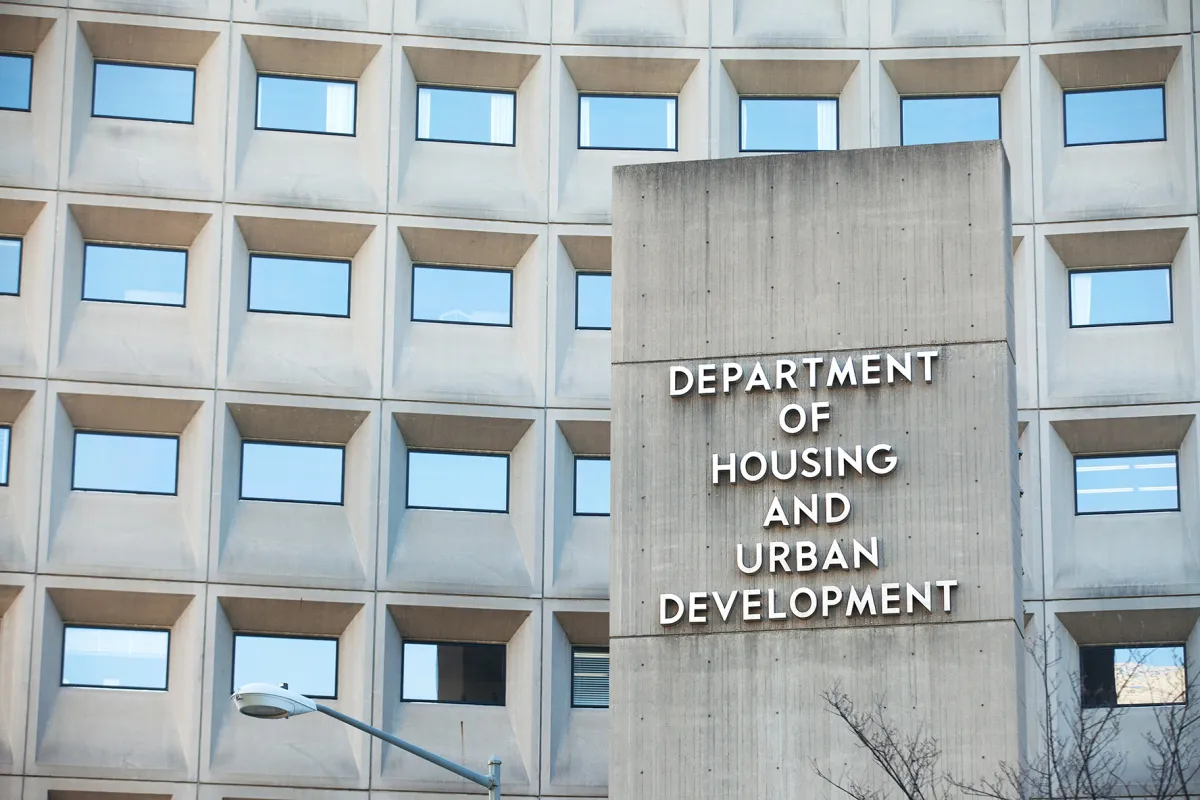 Photo: Department of Housing and Urban Development, via www.brookings.edu
The program, described in a 614-page implementation guide as "the most citizen-forward housing access initiative in a generation," replaces the previous 31-step system, which HUD acknowledged had produced "suboptimal completion rates" — a phrase that, in context, means approximately no one finished it.
"We heard the American people," said HUD Deputy Undersecretary for Applicant Journey Optimization Gerald Fitch at a press conference held in a conference room that took reporters 40 minutes to locate inside the HUD building. "They told us the old process was confusing, exhausting, and psychologically damaging. So we went back to the drawing board and cut eight entire steps. Eight. That's nearly a third."
Mr. Fitch did not take questions.
A Journey Through the Process
The Daily Procedure obtained a copy of the SHANS applicant guide, which begins with the reassuring note that "most applicants will find the process intuitive once they have completed the orientation module," before disclosing that the orientation module is itself a seven-step process requiring a government-issued photo ID, proof of current address, and a notarized letter confirming that the applicant does not currently have a stable address — a requirement that applicants without stable addresses have described as, quote, "a lot."
Step one asks applicants to register on the new SHANS portal, which went live in February and has been in "soft launch" ever since, meaning roughly 40 percent of its features are unavailable on any given day, and the remaining 60 percent redirect to a page explaining that the portal is experiencing high demand.
Step four, which housing advocates have quietly begun calling "the Bermuda Step," requires applicants to submit Form HUD-2291-B, a document confirming household income, alongside Form HUD-2291-C, which certifies that Form HUD-2291-B was completed accurately, and Form HUD-2291-D, which certifies that Form HUD-2291-C was completed by someone who understood Form HUD-2291-B. All three must be submitted in triplicate to three separate regional offices that are, per official HUD guidance, "not in communication with one another for processing purposes."
Step eleven requires a home visit from a Housing Needs Verification Specialist to confirm that the applicant's current living situation meets the threshold for housing need. The average wait time for this visit is currently listed as "eight to fourteen weeks," though advocates report that in several metropolitan areas the wait has stretched to eleven months, at which point the applicant's pre-qualification from step nine has expired and they must restart from step six.
Experts Weigh In
Dr. Patricia Okonkwo, a housing policy researcher at the Brookings-Adjacent Center for Residential Equity Studies, has spent the better part of three years mapping the SHANS process on what she describes as "a very large piece of paper."
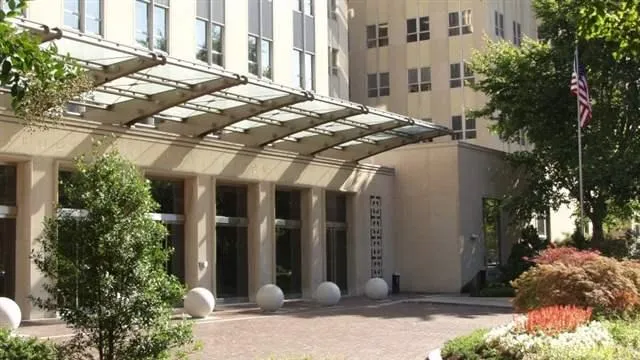 Photo: Brookings-Adjacent Center for Residential Equity Studies, via www.brookings.edu
"What's remarkable," Dr. Okonkwo said, "is that the system has been designed with genuine good intentions at every single stage. Each individual requirement exists for a legitimate administrative reason. It's only when you assemble them into a linear sequence that you realize you've built something that functionally filters out anyone who most needs the help."
She paused.
"That said, it is significantly improved from 2019. In 2019 there was also a quiz."
The National Low Income Housing Coalition estimates that the average applicant who begins the SHANS process today, assuming no interruptions, no missing documentation, and no portal downtime, can expect to reach the pre-waitlist confirmation stage — meaning they are now formally on a list to be considered for the actual waitlist — in approximately fourteen months. The actual waitlist, once joined, has an average wait time of between three and eleven years depending on the metropolitan area, a range that officials say reflects "the exciting diversity of local housing markets."
The Waitlist for the Waitlist: A Philosophical Achievement
Perhaps the most quietly audacious element of the SHANS framework is what internal HUD documents refer to as the "Pre-Queue Eligibility Confirmation Phase" — which is, in plain English, a waitlist for the waitlist.
HUD explains this is a necessary administrative buffer to manage demand on the primary waitlist, which would otherwise become unmanageable. Critics have noted that the Pre-Queue itself now has a wait of up to eighteen months in several cities, prompting at least one housing advocacy group to formally request clarification on whether there is, or will soon be, a waitlist for the Pre-Queue.
HUD's Office of Applicant Communications responded to that inquiry with a form letter directing the group to the SHANS portal.
The portal was experiencing high demand at time of publication.
Congressional Reaction
On Capitol Hill, reaction to the SHANS launch has been broadly positive, with members of both parties issuing statements praising the administration's commitment to housing access. A bipartisan group of senators sent a letter to HUD commending the eight-step reduction and requesting a briefing on what steps were cut and why.
HUD confirmed it had received the letter and would respond within 90 business days using Form HUD-0017-F, "Acknowledgment of Correspondence Regarding Housing Program Inquiries," which itself requires a return signature from the original sender within 30 days of receipt or is considered void.
The senators' offices have not yet confirmed whether they received the form.
Meanwhile, housing advocates say they will continue working with affected applicants, helping them navigate the system one step at a time, with particular attention to step four, where, they note, most people stop.
"We tell people to bring snacks," said Marcus Webb, a caseworker at a Philadelphia housing nonprofit. "And comfortable shoes. And, ideally, a notary public. There's a CVS nearby that does notarizations until six, which helps."
HUD says it expects SHANS to reach full operational capacity by Q3 of next year, at which point it will begin a formal review of the process to identify further streamlining opportunities. That review is expected to take approximately 18 months and will be conducted by a newly formed inter-agency task force whose membership has not yet been finalized.
Applications to join the task force open in the spring.